
Industrial knitting machines are the backbone of modern knitted fabric manufacturing. Whether a factory is producing t-shirt fabric, innerwear fabric, sportswear material, rib, interlock, Lycra fabric, or other knitted textiles, machine performance directly affects fabric quality, production speed, and profitability. For Indian textile manufacturers in Surat, Tirupur, Ludhiana, Ahmedabad, Mumbai, and other production hubs, regular maintenance is not optional. It is a smart production habit that protects the machine investment and reduces unexpected stoppages.
A well-maintained machine gives stable output, better GSM consistency, fewer fabric defects and longer service life. Poor maintenance can lead to needle breakage, holes, oil stains, uneven loops, yarn cuts, abnormal noise, and higher repair costs. The following maintenance tips can help mills run industrial knitting machines more smoothly and professionally.
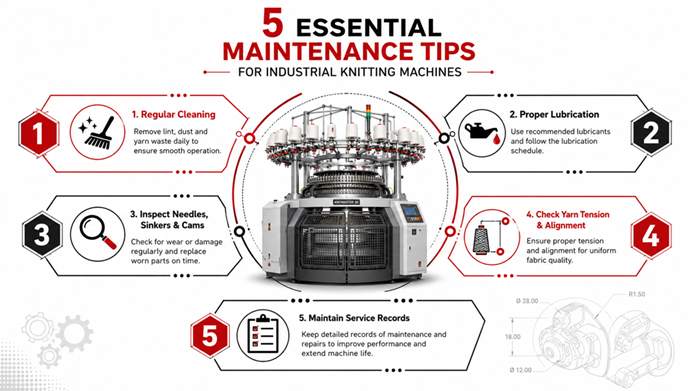
1. Clean the Machine Regularly
Dust, lint, yarn waste and oil residue can collect around needles, sinkers, feeders, yarn paths and machine surfaces. If this waste is not removed, yarn movement can become uneven, and fabric defects may increase. Operators should clean visible lint and yarn fly from the knitting zone, feeder area, and fabric take-down section every day. Air cleaning may be useful, but it should be done carefully so dust is not pushed into sensitive parts.
2. Use Proper Lubrication
Lubrication reduces friction between moving parts such as cylinders, cams, gears, needles and drive components. Too little lubrication can increase heat, noise, and wear. Too much lubrication can stain fabric and create cleaning issues. Always use recommended oil and check lubrication points regularly. In high-speed circular knitting machines, correct lubrication is especially important for stable running during long production shifts.
3. Inspect Needles, Sinkers and Cams
Needles, sinkers and cams play a major role in loop formation. If these parts are worn, bent, or wrongly fitted, fabric may show holes, lines, drop stitches, uneven loops, or streaks. A small damaged needle can create repeated defects across fabric rolls. Instead of waiting for a breakdown, factories should replace worn consumable parts at the right time. Preventive replacement can save bigger losses caused by fabric rejection and urgent repair work.
4. Maintain Correct Yarn Tension and Feeding
Yarn feeding and tension directly affect GSM, fabric surface, loop quality and stretch. Uneven tension can create barré marks, tight or loose loops, fabric variation and inconsistent roll quality. Feeders, tensioners, yarn guides and sensors should be checked regularly. When working with cotton, polyester, viscose, modal, nylon, Lycra or blended yarns, settings must be adjusted according to yarn count, fabric structure and required GSM.
5. Check Machine Alignment and Settings
Machine alignment and settings should be reviewed whenever there is a change in fabric structure, yarn type, GSM range or production requirement. Cylinder, dial, feeders, take-down system, speed settings and rolling tension all affect final fabric quality. Before bulk production, a short trial run helps identify tension issues, GSM variation, surface defects, and fabric hand feel problems early.
6. Follow a Preventive Maintenance Schedule
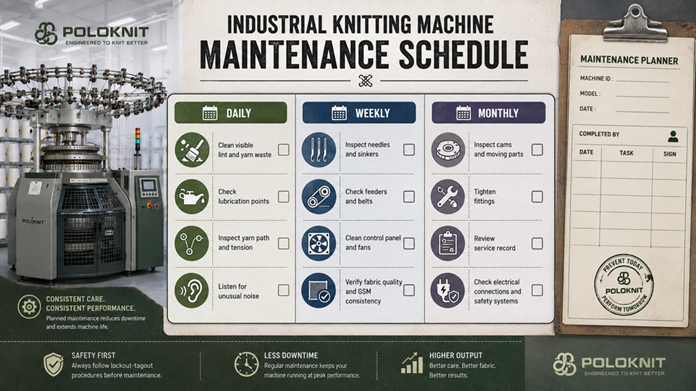
Many factories repair machines only after a breakdown. This approach increases downtime and disturbs delivery planning. A simple preventive schedule should include daily cleaning, weekly checking of needles, sinkers, feeders and belts, and monthly inspection of cams, moving parts, electrical connections and safety systems. Keeping a checklist near the machine helps operators follow the routine consistently.
7. Train Operators Properly
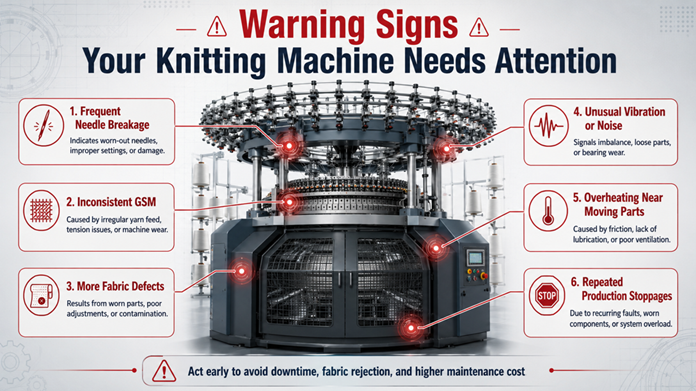
Even the best industrial knitting machine needs skilled operation. Operators should understand machine sound, yarn tension, fabric behaviour, needle condition and basic warning signs. A trained operator can identify unusual vibration, repeated yarn breakage, heating, abnormal noise, GSM variation and frequent needle damage early. Early action prevents bigger breakdowns and reduces production loss.
8. Maintain Service and Production Records
Every factory should maintain machine records such as oiling dates, part replacement, needle changes, breakdown history, service visits and fabric defect notes. These records help identify repeated issues. For example, if one machine repeatedly gives needle breakage or GSM variation, the root cause can be checked instead of doing temporary repairs again and again.
Why Maintenance Matters for Indian Textile Manufacturers?
In India’s competitive textile market, delivery delay, fabric rejection and machine downtime can directly affect profit. Good maintenance helps manufacturers achieve stable production, consistent fabric quality, better GSM control, lower downtime and longer machine life. It also supports better planning for bulk orders and helps factories maintain customer confidence.
Choose Poloknit for Reliable Knitting Machine Support
Poloknit focuses on circular knitting machines designed for Indian textile manufacturers. From machine selection to installation, training, spare parts and after-sales support, Poloknit helps factories run smarter and reduce production challenges. Whether you produce t-shirt fabric, innerwear fabric, sportswear fabric, Lycra fabric, rib, interlock or other knitted materials, the right machine and the right maintenance practice can improve long-term business performance.
Conclusion
Industrial knitting machine maintenance is not just a technical activity; it is a production strategy. Regular cleaning, proper lubrication, timely inspection, correct yarn tension, trained operators and preventive records can help textile manufacturers reduce downtime and improve fabric quality. For factories planning to start or expand knitted fabric production, Poloknit offers dependable circular knitting machine solutions with practical guidance and support.