
In the textile and garment industry, stitch quality plays a very important role in the final product. Whether it is a basic garment seam, a decorative embroidery design, a saree border, a fashion fabric, a logo patch, or a bridal wear pattern, the stitch decides the strength, finishing, appearance, and value of the product.
Many Indian textile businesses focus on fabric, thread, machine speed, or design, but they often ignore one important factor: the type of stitch being used. Different stitches have different purposes. Some stitches are used for strength, some for flexibility, some for temporary holding, and some for decoration. In embroidery production, stitch consistency, thread control, fabric handling, and machine stability are directly connected with the final output.
For manufacturers, job workers, boutiques, garment units, and embroidery businesses in India, understanding basic stitch types can help in better production planning and better quality control.
Why Stitch Knowledge Is Important in Textile Production?
A stitch is not just a line of thread. It is a technical part of garment construction and surface decoration. If the stitch is not correct, the garment may not last long, the embroidery may not look clean, and the customer may reject the product.
For example, a stretchable fabric requires a stitch that can move with the fabric. A decorative fashion garment may need satin, chain, or embroidery stitches for visual appeal. A heavy ethnic garment may need strong and stable stitching to hold zardoshi, beads, ribbon, or sequence work properly.
In machine embroidery, proper stitch formation helps achieve clean finishing, accurate placement, less thread breakage, and uniform results across production.
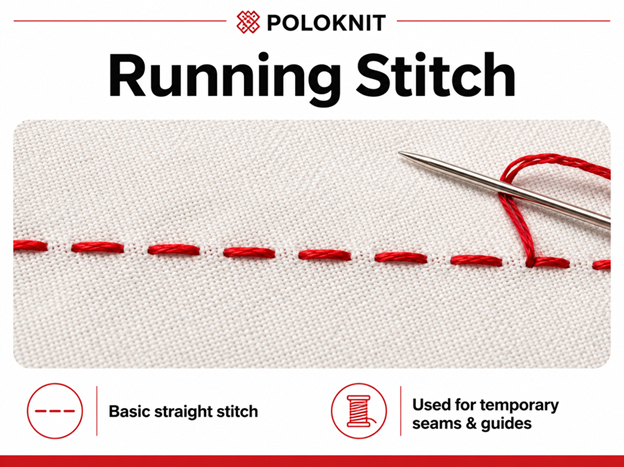
1. Running Stitch
Running stitch is one of the most basic stitch types. It is made by passing the thread in and out of the fabric in a straight line. In hand sewing, it is commonly used for temporary stitching, light seams, and basic fabric joining.
In production, running stitch is useful for understanding stitch direction, spacing, and fabric movement. While it is simple, uneven running stitches can make the product look poor. That is why machine consistency is important when similar linear effects are used in embroidery or decorative patterns.
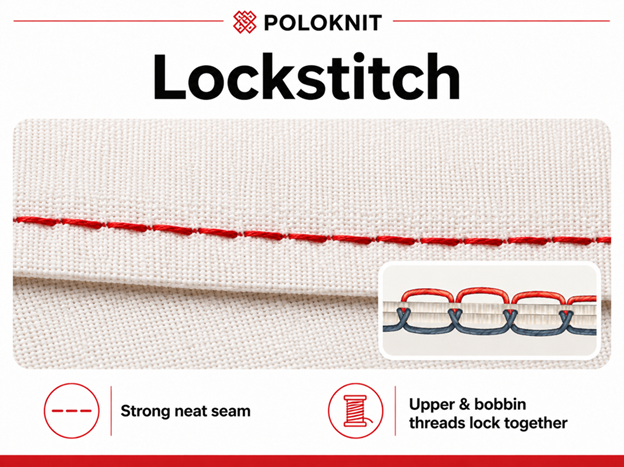
2. Lockstitch
Lockstitch is one of the most common stitches used in garments and industrial sewing. It is formed when the upper thread and lower thread lock together inside the fabric. This stitch gives a clean and strong seam, making it suitable for shirts, trousers, uniforms, home textiles, and many garment applications.
In textile businesses, lockstitch is valued because it gives neat finishing and strong construction. For embroidery buyers, understanding lockstitch helps in comparing basic sewing strength with decorative embroidery finishing.
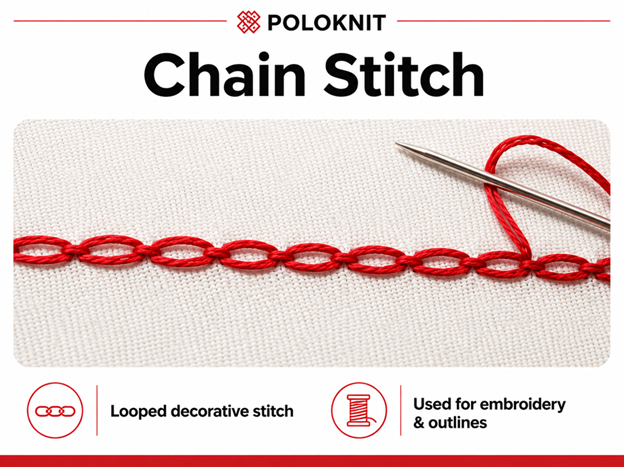
3. Chain Stitch
Chain stitch creates a looped pattern that looks like a chain. It is used in decorative stitching, embroidery, borders, and some garment applications. Chain stitch can give a traditional and attractive look, especially in ethnic and fashion textiles.
In embroidery work, chain-like effects are often used to create texture, borders, outlines, and decorative movement. Good machine control is important because uneven chain stitch can affect the design appearance.
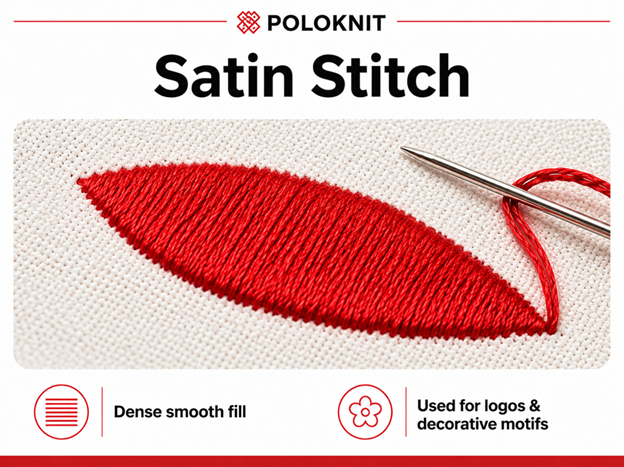
4. Satin Stitch
Satin stitch is widely used in embroidery for smooth and filled designs. It is commonly used for logos, letters, borders, flowers, and premium decorative areas. The stitches are placed closely together, creating a clean, shiny, and smooth surface.
In computerized machine embroidery, satin stitch quality depends on thread tension, needle movement, design digitizing, and machine stability. If the machine is not stable, satin areas may look uneven or loose. For Indian garment and branding businesses, satin stitch is important for premium logo and design finishing.
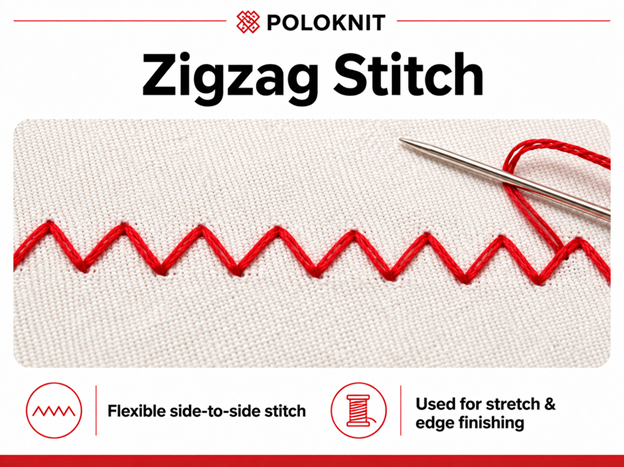
5. Zigzag Stitch
Zigzag stitch moves from side to side instead of forming a straight line. It is useful for stretchable fabrics, edges, repairs, and decorative effects. This stitch gives flexibility and prevents fabric edges from fraying.
In textile production, zigzag stitch is helpful when the fabric needs movement. For embroidery, zigzag-style stitch structures can also support fill areas, outlines, and decorative patterns.
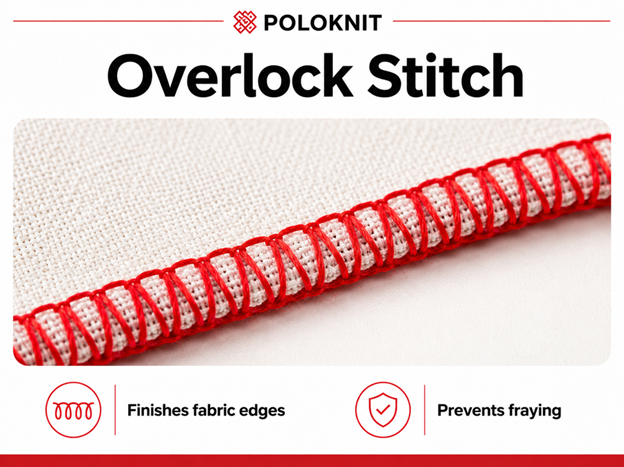
6. Overlock Stitch
Overlock stitch is used to finish fabric edges and prevent fraying. It is commonly used in garment manufacturing, especially for knitwear, innerwear, T-shirts, leggings, and stretch garments. Overlock stitching gives a clean inside finish and improves garment durability.
For textile manufacturers, overlock stitching is important because customers also check inside finishing. Even if embroidery is excellent, poor garment stitching can reduce the overall product value.
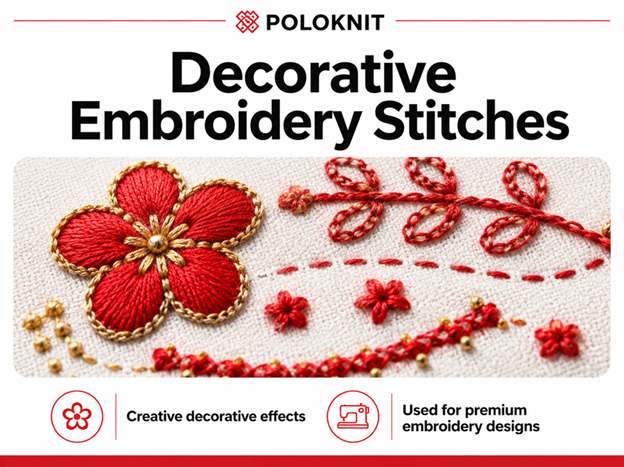
7. Decorative Embroidery Stitches
Apart from basic sewing stitches, embroidery includes many decorative stitch effects. These can include filled stitches, border stitches, sequin effects, bead placement, chenille texture, ribbon work, cording effects, and zardoshi-style detailing.
This is where embroidery machines become important for modern textile businesses. Poloknit embroidery machines are designed for applications such as beads, zardoshi + beads, chenille, beads + ribbon, triple sequence, and twin sequence + cording embroidery. These machines help manufacturers create premium designs with stable performance, accurate placement, consistent stitch quality, and professional production output.
Stitch Quality Depends on the Right Machine
Even the best design can fail if the stitch quality is poor. In machine embroidery, stitch quality depends on machine stability, thread tension, needle condition, fabric handling, operator skill, and proper maintenance.
A good embroidery machine should support smooth operation, consistent output, less downtime, and clean finishing. For Indian textile businesses, this directly affects production speed, wastage control, customer satisfaction, and profit.
Conclusion
Understanding different types of sewing stitches helps textile businesses improve garment quality, embroidery finishing, and production planning. From basic running stitch and lockstitch to satin stitch, chain stitch, zigzag, overlock, and decorative embroidery effects, every stitch has its own purpose.
For manufacturers who want to produce premium embroidered fabrics, sarees, garments, ethnic wear, fashion textiles, and value-added products, machine selection is very important. The right embroidery machine helps deliver accurate stitch quality, stable performance, and better long-term output.
If you are planning to expand your embroidery production, connect with Poloknit for professional machine guidance and support.