
In circular knitting production, fabric quality is directly connected with machine condition, yarn quality, operator skill, and correct machine settings. For Indian textile manufacturers, even a small fabric defect can create major problems such as roll rejection, delayed dispatch, wastage, customer complaints, and lower profit margins. This is why understanding common fabric defects in circular knitting is very important for every knitting unit.
Circular knitting machines are widely used for producing T-shirt fabric, innerwear fabric, sportswear fabric, rib fabric, interlock fabric, Lycra fabric, and many other knitted materials. But if the machine is not maintained properly, or if yarn tension, needle condition, lubrication, feeder setting, and machine calibration are not correct, defects can appear during production.
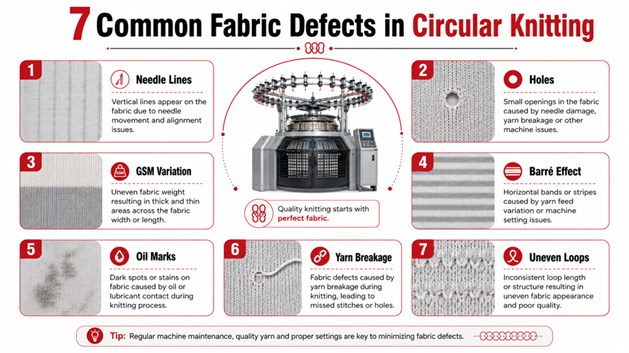
1. Needle Lines
Needle lines are one of the most common defects in knitted fabric. These appear as vertical lines on the fabric surface and affect the overall look and quality of the roll. Needle lines are usually caused by damaged needles, worn needles, incorrect needle selection, or improper needle movement. If even one needle is bent or not working smoothly, it can create a visible line throughout the fabric. To reduce this problem, operators should inspect needles regularly, replace damaged needles immediately, keep the needle track clean, and maintain proper lubrication.
2. Holes in Fabric
Fabric holes can lead to direct rejection, especially in premium fabric orders. In innerwear, T-shirt, and sportswear fabric, holes are not acceptable because they affect both appearance and durability. Common causes include broken needles, yarn breakage, incorrect yarn tension, weak yarn, rough machine parts, or improper take-down tension. To reduce holes, use good-quality yarn, check yarn strength before production, and maintain correct yarn tension. Operators should also check needles, sinkers, feeders, and yarn guides regularly.
3. GSM Variation
GSM variation means the fabric weight is not consistent across rolls or within the same roll. This is a serious issue because buyers often require a fixed GSM range. GSM variation can happen due to uneven yarn tension, wrong stitch length, feeder issues, machine speed variation, improper take-down tension, or inconsistent yarn count. To control GSM variation, the machine should be calibrated properly before bulk production. Stitch length, feeder settings, take-down tension, and yarn tension must be checked, and a small trial roll should be tested before starting full production.
4. Barré Effect
Barré is a visible shade-like variation or striping effect in knitted fabric. It often appears as uneven bands across the fabric and can reduce the fabric’s commercial value. This defect is commonly caused by variation in yarn quality, yarn count, yarn dyeing, feeder tension, or machine settings. To reduce barré, use consistent yarn from the same lot whenever possible, balance feeder tension, avoid unnecessary yarn lot mixing, and verify machine settings before production.
5. Oil Marks
Oil marks can damage fabric appearance and create problems during dyeing, finishing, and garment production. These marks are usually caused by excess lubrication, leakage, dirty machine parts, or poor oil quality. While lubrication is necessary for smooth machine operation, too much oil or wrong oil application can stain the fabric. To reduce oil marks, use the recommended lubricating oil, maintain the correct oiling level, check oil pipes and spray systems, and clean the machine surface and fabric path properly.
6. Yarn Breakage
Yarn breakage causes production stoppage, fabric holes, and uneven fabric quality. Frequent yarn breakage also reduces machine efficiency and increases operator workload. The main reasons include poor yarn quality, high tension, rough yarn guides, damaged feeders, incorrect yarn path, humidity issues, or excessive machine speed. To reduce yarn breakage, use suitable yarn for the required fabric structure, check yarn guides and tensioners, avoid excessive speed, and maintain proper humidity in the production area.
7. Uneven Loops
Uneven loops affect fabric surface, stretch, hand feel, and appearance. This defect can make the fabric look unprofessional and may create problems during garment stitching. Uneven loops are commonly caused by incorrect stitch length, worn needles, improper cam settings, poor yarn tension, or machine vibration. To reduce uneven loops, maintain proper stitch length, check cam settings, inspect needles and sinkers, and ensure the machine runs smoothly without unnecessary vibration.
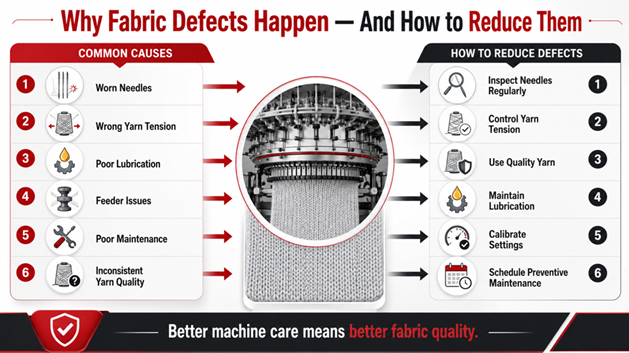
Why Machine Maintenance Matters?
Most fabric defects can be reduced through proper machine maintenance. Regular cleaning, lubrication, needle inspection, feeder checking, yarn tension control, and service records help factories maintain stable production. For Indian textile mills, downtime and fabric rejection directly affect profitability. Preventive maintenance is always better than emergency repair because it saves time, reduces wastage, and improves delivery performance.
How Poloknit Helps Indian Textile Manufacturers?
Poloknit focuses on circular knitting machines designed for stable performance, long service life, and consistent fabric production. Poloknit’s machine range supports different production requirements, including Single Jersey, Double Jersey, Jacquard, and Open Width Circular Knitting Machines. Along with machine supply, Poloknit supports customers with machine selection guidance, installation, training, spare parts, and after-sales service. This helps Indian manufacturers reduce production problems and run their knitting units more confidently.
Conclusion
Fabric defects in circular knitting are not just technical problems; they are business problems. Needle lines, holes, GSM variation, barré, oil marks, yarn breakage, and uneven loops can increase wastage and reduce profit. With the right machine, skilled operators, good yarn, and regular maintenance, these defects can be controlled.