Introduction
India is one of the strongest textile markets in the world. From daily wear garments to sportswear, innerwear, kidswear, uniforms, fashion wear, and export garments, knitted fabric is used in almost every apparel category. This growing demand has created a strong opportunity for entrepreneurs who want to enter the knitted fabric manufacturing business.
Starting a knitted fabric business can be profitable, but success depends on proper planning. Many new investors think that buying a machine is the only major step. In reality, the business also depends on market research, fabric category selection, yarn quality, machine planning, labour, quality control, buyer network, and after-sales support.
For textile hubs like Surat, Tirupur, Ludhiana, Ahmedabad, Mumbai, Delhi NCR, and Kolkata, knitted fabric production offers many opportunities. But before starting, every new entrepreneur should understand the right process.
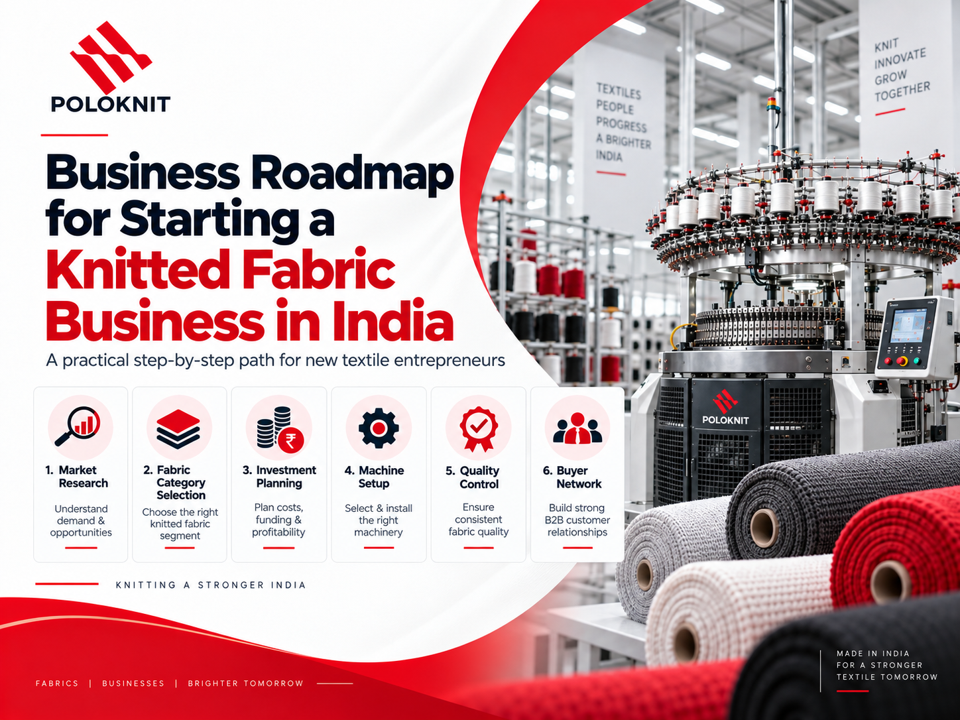
1. Understand the Knitted Fabric Market
Before investing money, first understand the market demand. Knitted fabric is used in T-shirts, leggings, innerwear, sportswear, nightwear, kidswear, rib collars, cuffs, and fashion garments. Each category has different buyers and different production requirements.
For example, if your target customers are t-shirt manufacturers, single jersey fabric can be a good starting point. If your target customers are innerwear or sportswear brands, then cotton Lycra, polyester Lycra, modal blend, and stretch fabrics may have better demand.
Talk to fabric traders, garment manufacturers, wholesalers, dyeing mills, and local textile buyers before finalising your product category. Good market research helps you avoid the wrong investment.
2. Choose the Right Fabric Category
New manufacturers should not start with too many fabric types at once. It is better to focus on one or two categories and build expertise.
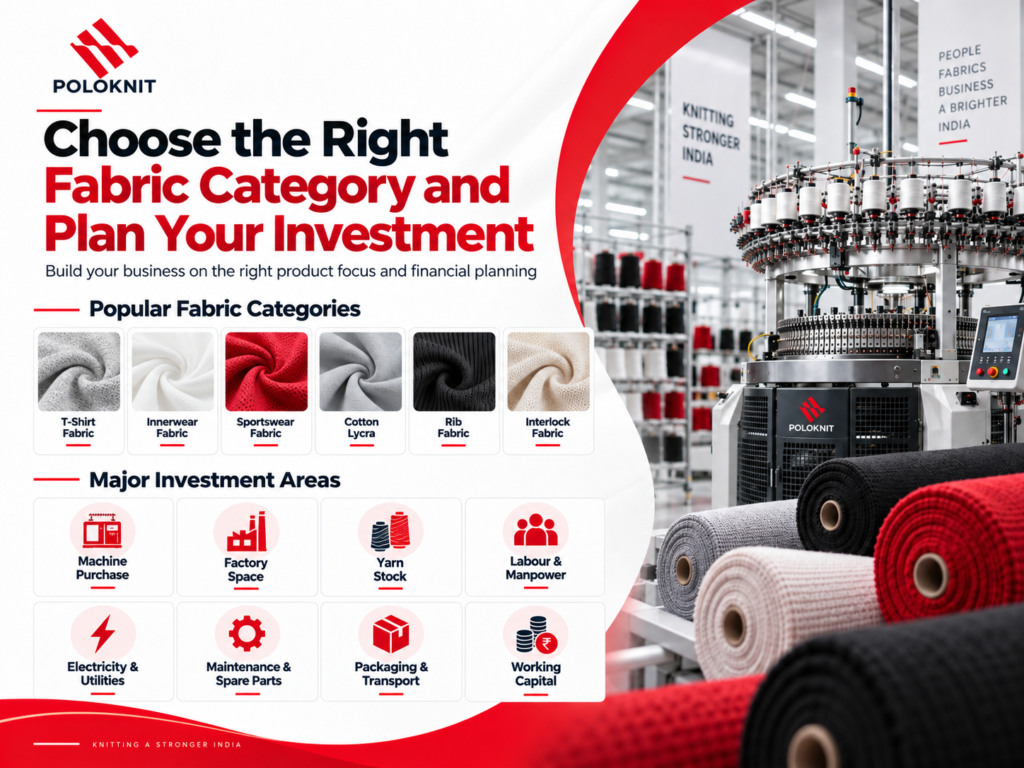
Popular knitted fabric categories in India include T-shirt fabric, innerwear fabric, sportswear fabric, cotton Lycra fabric, polyester Lycra fabric, rib fabric, interlock fabric, kidswear fabric, and fashion fabric.
Each fabric has a different GSM range, yarn requirement, machine setup, finishing process, and buyer expectation. Innerwear fabric needs softness and comfort. Sportswear fabric needs stretch, recovery, and durability. T-shirt fabric needs a smooth surface, stable GSM, and good dyeing results.
3. Plan Your Investment Properly
A knitted fabric business needs complete investment planning. Many new entrepreneurs calculate only machine cost, but the actual business also needs working capital.
Important investment areas include machine purchase, factory space, yarn stock, labour, electricity, compressor, fabric inspection, packaging, maintenance, transportation, and emergency funds.
Do not choose a machine only because it is cheaper. A low-quality machine can create fabric defects, GSM variation, downtime, maintenance issues, and production loss. A good machine may cost more at the beginning, but it can save money in the long run through stable production and lower rejection.
4. Select the Right Circular Knitting Machine
The circular knitting machine is the heart of knitted fabric manufacturing. Choosing the right machine depends on fabric type, yarn type, GSM, gauge, diameter, feeder count, and production capacity.
Single Jersey Circular Knitting Machines are commonly used for T-shirt fabric, lightweight fabric, innerwear fabric, and casualwear fabric.
Double Jersey Circular Knitting Machines are suitable for rib, interlock, thicker fabric, and structured knitted fabric.
Open Width Circular Knitting Machines are useful for Lycra, Spandex, sportswear, activewear, and stretch fabrics where flat rolling and crease reduction are important.
Before buying, discuss your fabric plan with the machine supplier. The right supplier will guide you based on your business goal, not just the machine price.
5. Focus on Yarn Quality and Fabric Consistency
Good fabric starts with good yarn. Poor yarn can create yarn breakage, uneven loops, barré effect, holes, shade variation, and fabric rejection. New manufacturers should buy yarn from reliable suppliers and avoid mixing different yarn lots without checking.
Fabric consistency is also very important. Buyers usually check GSM, width, shrinkage, stretch, recovery, hand feel, and finishing quality before approval. Regular checking during production helps avoid big losses.
6. Build a Strong Quality Control Process
Quality control should start from day one. Check yarn before production, inspect machine settings, monitor fabric during knitting, and check every roll before dispatch.
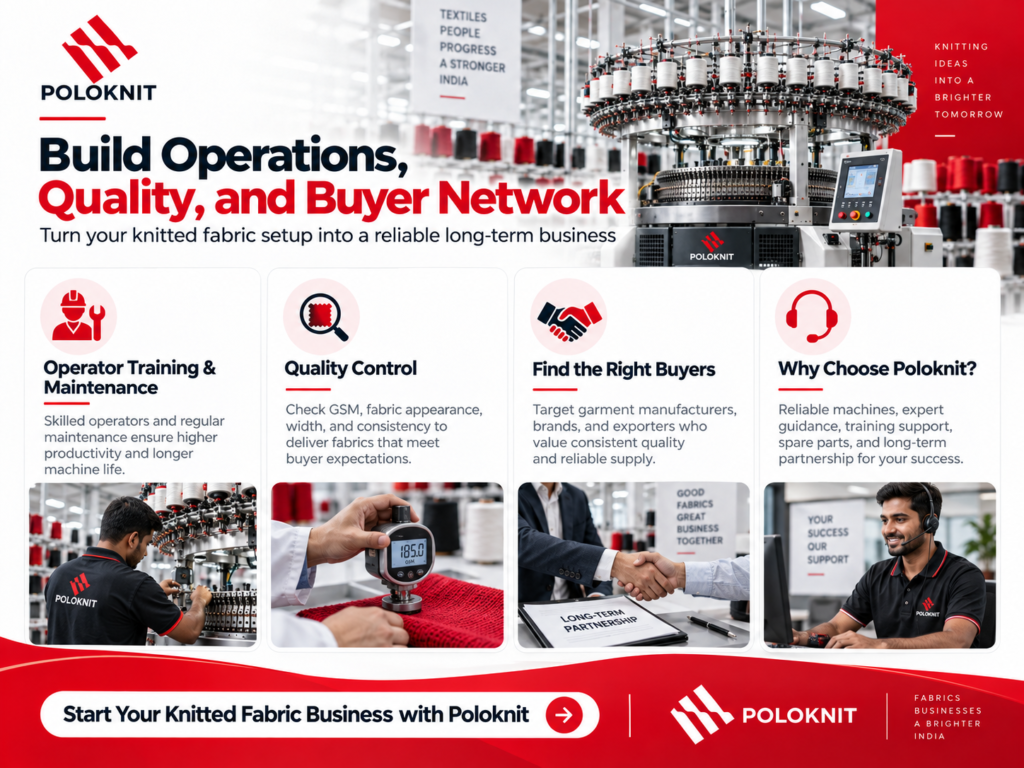
Important quality checks include GSM, fabric width, holes, needle lines, oil marks, shade variation, shrinkage, stretch recovery, and surface finish. A proper quality process improves buyer trust and reduces rejection.
7. Train Operators and Maintain Machines
A skilled operator can save your factory from many production problems. Operators should understand yarn tension, needle condition, machine sound, lubrication, fabric take-down, and basic troubleshooting.
Regular maintenance is also very important. Daily cleaning, proper lubrication, needle and sinker inspection, feeder checking, and service records help reduce downtime. Preventive maintenance is always better than emergency repair.
8. Find the Right Buyers
After production planning, selling is the next major step. New fabric manufacturers can target garment manufacturers, wholesalers, fabric traders, exporters, fashion brands, innerwear brands, sportswear brands, uniform suppliers, and local textile markets.
For lead generation, you can use IndiaMART, Google Business Profile, LinkedIn, website SEO, WhatsApp marketing, referrals, and local textile market visits. In the beginning, focus on consistent quality and timely delivery. Once buyers trust your fabric, repeat orders become easier.
9. Avoid Common Mistakes
Many new manufacturers make common mistakes such as buying machines without a market study, choosing fabric only because it is trending, ignoring working capital, using poor yarn, not maintaining quality records, and selecting machines only based on low price.
Another big mistake is ignoring after-sales support. In textile manufacturing, machine uptime, spare parts availability, technical guidance, and service support are very important for long-term success.
Why Choose Poloknit?
Poloknit supports Indian textile entrepreneurs with circular knitting machine solutions, machine selection guidance, installation support, operator training, spare parts, and after-sales service.
Whether you want to start producing T-shirt fabric, innerwear fabric, sportswear fabric, Lycra fabric, rib fabric, or interlock fabric, choosing the right machine can make your business stronger from the beginning.
Poloknit’s goal is to help textile manufacturers run smarter, reduce production challenges, improve fabric quality, and build long-term growth.
Conclusion
Starting a knitted fabric business in India can be a profitable opportunity when it is planned properly. The key is to understand market demand, choose the right fabric category, invest in the right circular knitting machine, maintain fabric quality, train operators, and build a strong buyer network.
A successful fabric business is not built only by buying machinery. It is built by combining the right machine, good yarn, skilled operation, quality control, and reliable support.