Introduction
For Indian knitted fabric manufacturers, selecting yarn is a business decision as much as a technical one. Cotton, polyester, viscose, and modal can all produce attractive knitted fabrics, but they differ in moisture behaviour, softness, durability, processing needs, and cost. Choosing purely on yarn price may lead to complaints about comfort, shrinkage, or fabric performance after washing.
Whether you supply T-shirt makers in Tirupur, innerwear brands in Surat, or sportswear manufacturers across India, start with the garment’s end use and the buyer’s specifications – not a claim that one fibre is universally best.
1. Cotton: Familiar Comfort for Everyday Knits
Cotton is a natural cellulosic fibre valued for its soft, breathable feel and moisture absorption. It is a familiar choice for everyday T-shirts, polos, kidswear, and cotton-rich innerwear. Cotton knit fabric can offer excellent wearer comfort, especially in warm conditions.
However, cotton fabrics may crease, take longer to dry, and shrink if knitting and finishing are not controlled. Yarn count, combing quality, stitch length, dyeing, and compacting influence the final result. A cotton-Lycra blend can add stretch recovery for fitted garments.
2. Polyester: Strength, Easy Care and Performance
Polyester is a synthetic fibre valued for strength, dimensional stability, and relatively quick drying. Polyester yarns are widely used in sportswear, uniforms, activewear and performance blends. Fabric engineers can also use filament type, yarn texturing and knit structure to adjust feel and moisture movement.
Polyester absorbs much less moisture into the fibre than cotton or regenerated cellulose. A moisture-wicking finish or engineered knit construction may improve sweat transport, but it should be tested rather than assumed. Pilling, heat comfort, and dyeing requirements also deserve attention.
3. Viscose: Fluid Drape and Soft Touch
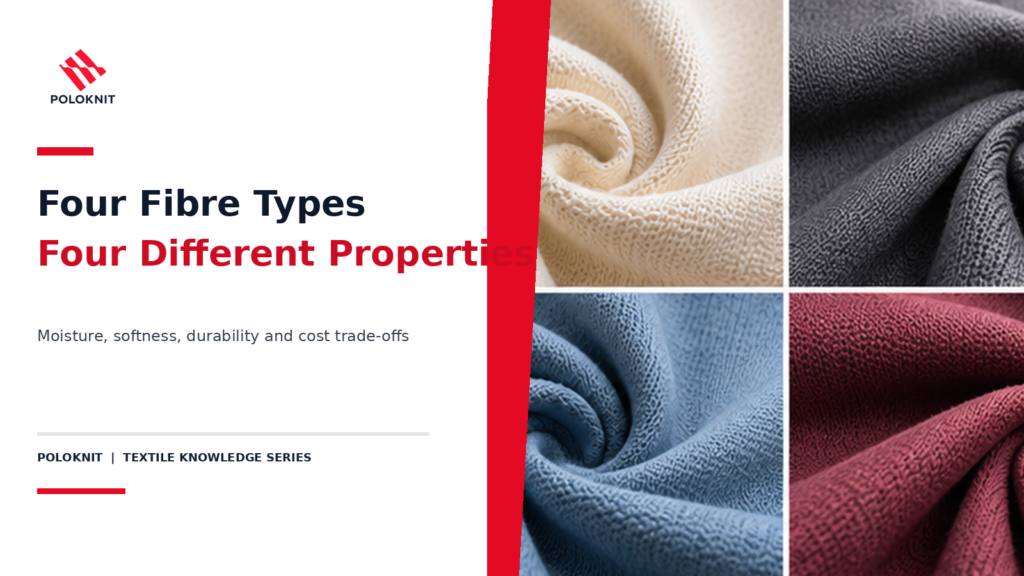
Viscose is regenerated cellulose, usually made from dissolved wood pulp. Its comfortable, absorbent feel and fluid drape make it popular for fashion tops, dresses, loose-fit T-shirts and soft knitwear. Viscose can produce smooth fabrics with attractive colour depth.
Ordinary viscose is generally weaker when wet than when dry and may distort or shrink without suitable processing. Mills should pay particular attention to wet handling, stitch control, relaxation, finishing and wash testing before accepting bulk orders.
4. Modal: Premium Softness and Better Wet Strength
Modal is another regenerated cellulosic fibre, manufactured through a modified process. It is recognised for its particularly smooth, soft hand feel and generally higher wet strength than conventional viscose. Modal and micro-modal are popular for premium innerwear, lounge clothing, sleepwear and soft jersey fabrics.
Modal is not automatically shrink-proof, and its price and available yarn grades should be evaluated against the target product. Blending modal with elastane can improve stretch recovery; finishing and the knit structure still determine whether the final garment performs well.
5. Which Yarn Is Best for Each Fabric Business?
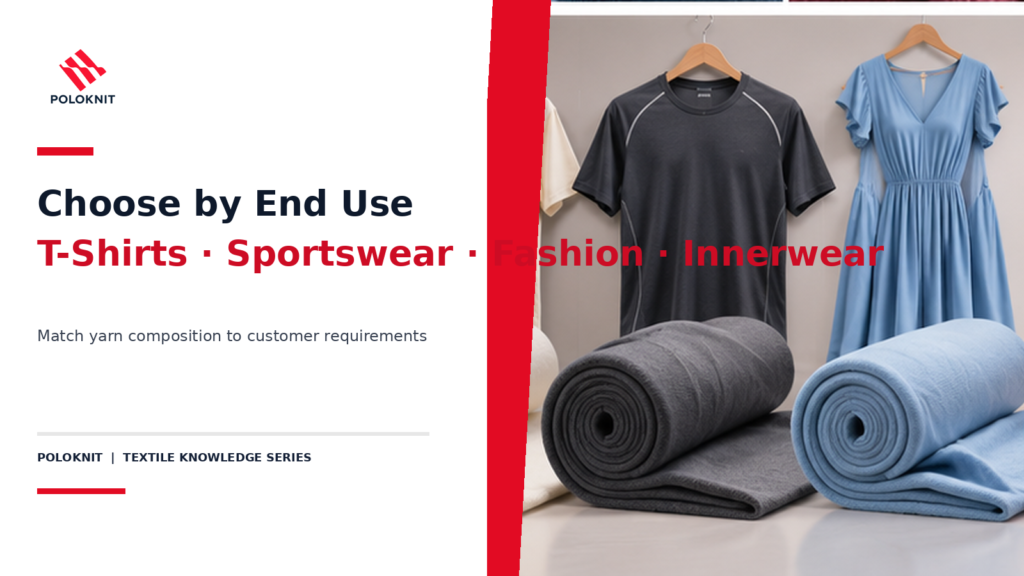
For everyday cotton T-shirts, cotton or cotton-rich blends are practical choices. For lightweight sportswear, polyester and suitable polyester blends often provide strength and fast-drying potential. For flowy fashion garments, viscose can provide the required drape. For premium innerwear and soft next-to-skin garments, modal and modal-elastane blends deserve testing.
There is no universal winner. Buyer requirements, yarn availability, final GSM, machine gauge, fabric width, expected hand feel, and order price should determine the choice. A blended yarn may balance features more effectively than a 100% single-fibre option.
6. How to Compare Yarn Costs in the Indian Market
Compare quoted prices only after checking yarn count, fibre grade, composition, lot consistency, and the required order volume. A lower per-kilogram yarn rate does not always mean a cheaper finished fabric. Yarn wastage, knitting efficiency, processing losses, dyeing methods, shrinkage allowance, and rejected rolls can change your true cost. For example, a soft premium yarn may justify a higher selling price only when buyers can verify comfort, appearance, and durability.
Ask suppliers for traceable specifications and test certificates where appropriate. Work out a sample-lot cost per usable kilogram of finished fabric, including wastage and finishing charges. This gives buyers a clearer quotation and protects the manufacturer from unexpected losses.
7. Discuss Buyer Needs Before Selecting a Blend
A sportswear buyer may prioritise drying performance, colour fastness and abrasion resistance. An innerwear brand may give greater weight to softness, breathability and stretch recovery. Fashion labels may choose a fluid drape, while institutional buyers can prioritise washing durability and price stability. Record these expectations in a specification sheet before approving the yarn.
8. Quality Checks Before Bulk Knitting
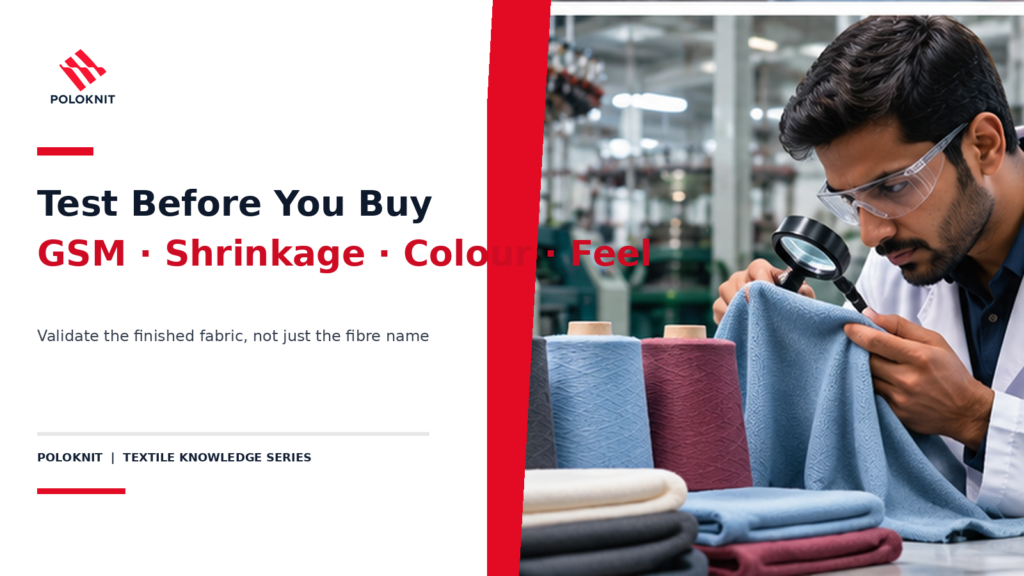
Before committing to an order, knit and finish a trial lot. Check the finished fabric for GSM, width, shrinkage after washing, colour consistency, pilling, stretch recovery, and surface defects. Compare the results against written buyer tolerances, not informal descriptions like ‘premium’ or ‘soft’.
Factories should document yarn lot, composition, stitch length, knitting settings, dyeing recipe, and finishing conditions. These records help identify the reasons for variation and make repeat orders more consistent.
How Poloknit Supports the Right Fabric Plan
Poloknit works with Indian textile manufacturers on circular knitting machine selection and production requirements. The appropriate machine configuration depends on yarn type, fabric construction, gauge, feeder requirements, and intended output. Machine selection guidance, installation, and after-sales support can help factories plan production more confidently.
Conclusion
Cotton offers familiar everyday comfort, polyester brings durability and easy-care potential, viscose delivers fluid drape, and modal is valued for premium softness. The best choice depends on who will wear the garment, what the buyer expects, and how the finished fabric is tested. Invest in the right yarn and production setup together to build stronger long-term buyer relationships.