Introduction
Manufacturing knitted fabric is only half the business. The real opportunity begins when you find reliable garment brands, buying houses, traders, and exporters who place repeat orders. Across Indian textile centres such as Surat, Tirupur, Ludhiana and Delhi NCR, buyers look for more than a competitive price: they need dependable quality, clear specifications and timely supply.
Whether you produce single jersey, rib, interlock, cotton Lycra or sportswear fabric, a practical sales system can help turn your knitting capacity into a steady business. Here is how to approach the right customers and build long-term relationships.
1. Identify the Right Type of Fabric Buyer
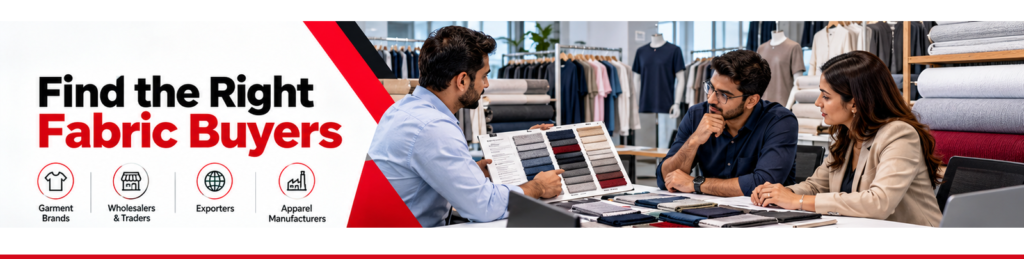
Not every buyer needs the same fabric. Garment brands may purchase through sourcing teams or approved vendors; garment factories need fabric suited to their cutting and stitching plans; wholesalers often prioritize available stock and competitive rates. Export houses typically require tighter documentation, testing, and delivery discipline.
Make a target list by garment category, fabric composition, monthly requirement, and location. Approach innerwear brands for soft stretch fabrics, T-shirt manufacturers for jersey and piqué, and activewear producers for performance blends. Matching your product to the right buyer saves time and sample expenses.
2. Build a Buyer-Ready Fabric Range
A focused swatch collection sells better than an unorganized catalogue. Start with a manageable range of popular constructions and show each option in relevant colours and finishes. Explain where it works: T-shirts, leggings, innerwear, kidswear, uniforms, or sportswear.
For every swatch, attach a simple technical specification sheet showing fibre composition, GSM, usable width, yarn details where relevant, colour or shade reference, shrinkage results, stretch and recovery, and finishing method. State whether the values refer to grey fabric or finished fabric; they are not interchangeable.
3. Make Quality Your Strongest Sales Argument
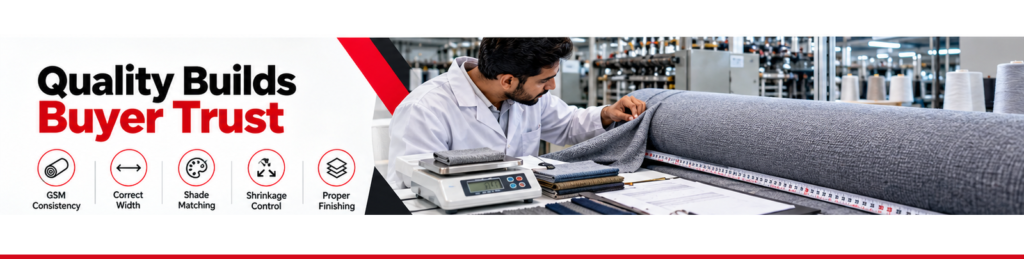
Fabric buyers commonly evaluate GSM tolerance, width, shade consistency, shrinkage, defects, hand feel, and performance after washing. One good sample is not enough: the approved quality must be repeatable in bulk.
Use lot identification, fabric inspection, and recorded test results. Confirm buyer-specific tolerances rather than assuming one universal standard. When required, arrange testing through a suitable laboratory and share authentic reports. Consistent quality protects both the garment brand and your reputation.
4. Prepare Professional Samples and Quotations
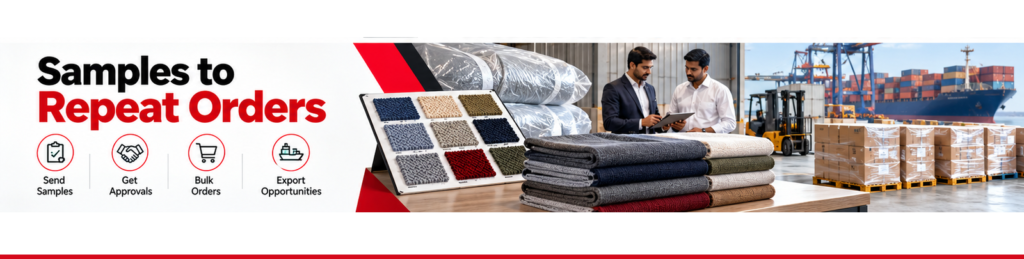
Present neatly labelled swatch cards, a short company profile, factory capabilities, and realistic production lead times. A buyer should quickly understand what you can manufacture, your minimum order quantity, available colours, and capacity.
Your quotation should clearly state the price basis—per kilogram or metre—composition, GSM, usable width, finishing, packing, taxes as applicable, freight responsibility, sample policy, payment terms, and quote validity. Avoid offering a low rate before accounting for yarn, processing, rejection, overheads, and working capital.
5. Find Buyers Through Offline and Online Channels
Visit textile markets, sourcing offices, garment clusters and relevant industry exhibitions. Surat can help with trader networks; Tirupur offers access to knitwear manufacturing; other clusters have their own garment specializations. Bring a concise swatch book and follow up with a written specification and quotation.
Online, use a professional website, IndiaMART, Google Business Profile, LinkedIn, and business WhatsApp. Publish clear fabric photographs and searchable descriptions such as “cotton Lycra fabric manufacturer in Surat.” Contact sourcing managers respectfully with a brief introduction and a relevant product sheet, not mass promotional messages.
6. Convert Enquiries into Trial and Bulk Orders
When a buyer shows interest, clarify the end use, approved sample, target GSM, width, shrinkage, colours, test requirements, order quantity, and dispatch deadline. Offer a practical sample-development or trial-order process and document any changes requested.
Before bulk production, obtain written approval of the final specification, shade standard, rate, quantity, delivery schedule and payment arrangement. Keep an approved reference sample and communicate early if raw materials, processing, or finishing cause a delay. This avoids expensive disputes after dispatch.
7. Understand the Export Route
You can supply Indian garment exporters without exporting fabric yourself; in that case, the domestic buyer normally manages the garment shipment. Directly exporting fabric is a different process involving overseas customers, customs procedures, and logistics.
For direct exports, check the applicable Importer-Exporter Code (IEC), buyer-country requirements, and shipment documents. Common documents include a commercial invoice, packing list, shipping bill, and transport document; certificates or testing may be needed depending on the product and destination. Confirm current requirements with DGFT and a qualified freight or customs professional before dispatch.
8. Turn First Orders into Long-Term Buyers
Repeat business is earned through predictable fabric quality, prompt sampling, honest communication, and on-time dispatch. Keep shade and lot records, respond quickly to complaints, and review actual rejection and delivery performance. Share new constructions only when they suit a buyer’s collection or upcoming season.
A buyer who trusts your quality and reliability is usually more valuable than a one-time order won only on price.
How Poloknit Supports Fabric Manufacturers?
Poloknit helps Indian textile businesses select suitable circular knitting machinery for their fabric applications, with installation guidance, operator training, spare parts, and after-sales support. Reliable machine selection and disciplined production can support the consistency buyers expect, alongside good yarn, processing, and quality control.
Conclusion
To sell knitted fabric successfully in India, start by understanding the buyer, prepare professional samples, control technical specifications, and quote transparently. Combine offline relationships with digital discovery, follow a clear approval process, and treat every dispatch as a chance to earn the next order.
Planning to expand knitted fabric production? Contact Poloknit for machine selection guidance and dependable technical support.