
Introduction
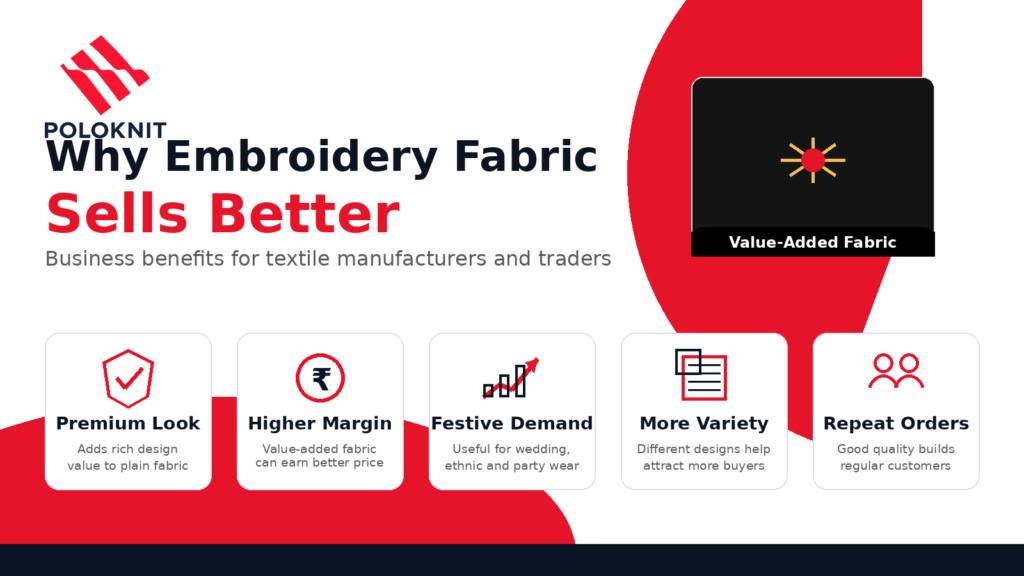
Embroidery fabric has strong demand in the Indian textile market because it adds beauty, richness, and value to a normal fabric. Whether the final product is a saree, lehenga, dress material, kurti, blouse, dupatta, kidswear, fashion garment, or home furnishing item, embroidery helps the product look premium and more attractive to customers.
Many manufacturers can make good embroidery fabric, but they struggle to sell it properly in the market. The reason is simple: selling embroidery fabric is not only about production. It also needs the right buyer selection, good sample presentation, correct pricing, quality consistency, market follow-up, and clear communication.
If you are a textile manufacturer, embroidery job worker, fabric trader, or new business owner, this guide will help you understand how to sell embroidery fabric in a practical way.
1. Identify the Right Buyer First
Before you start selling, you need to understand who can buy your embroidery fabric. Not every design is suitable for every customer. A heavy zardoshi or bead fabric may be perfect for bridal wear, while light thread embroidery may work better for daily wear or dress materials.
Common buyers for embroidery fabric include saree manufacturers, lehenga makers, ethnic wear brands, boutiques, garment factories, fabric wholesalers, dress material traders, designers, exporters, and online resellers. Once you know your target buyer, you can prepare designs and prices according to their market.
2. Create a Clear Product Category
Do not show random designs without grouping. Buyers understand products faster when your collection is organized. You can divide your embroidery fabric into categories like saree borders, lehenga fabric, blouse fabric, dupatta embroidery, dress material fabric, fashion fabric, kidswear fabric, home decor embroidery, and custom design work.
Also mention the embroidery type clearly. For example: beadwork, zardoshi work, sequin work, chenille work, ribbon work, cording work, or thread embroidery. Clear category names help buyers choose faster and also make your catalog more professional.
3. Prepare a Strong Sample Book
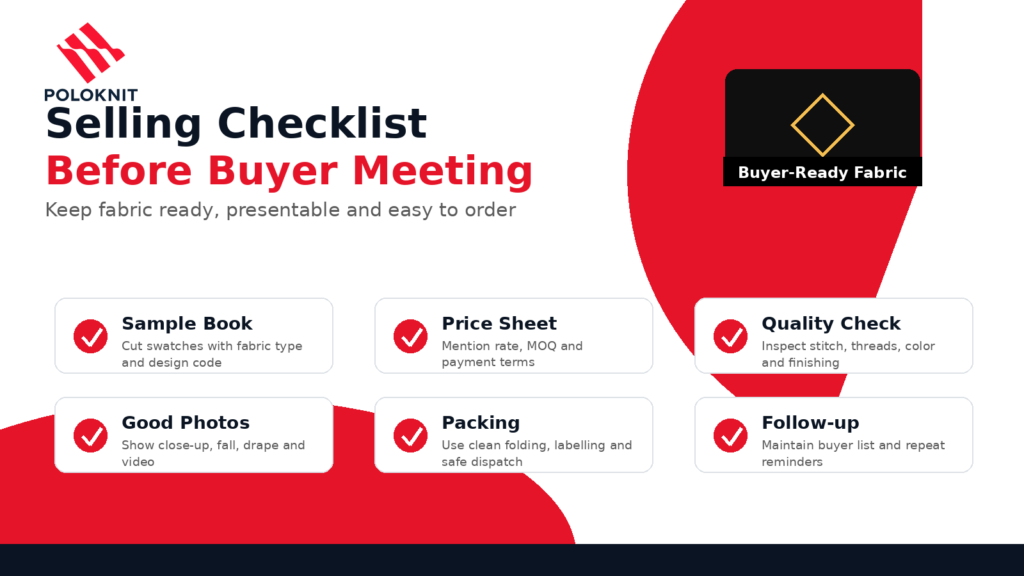
A sample book is one of the most important tools for selling embroidery fabric. Buyers do not like only verbal explanations. They want to touch the fabric, check the embroidery quality, see the color combination, and understand the finishing.
Your sample book should include fabric swatches, design codes, available colors, embroidery type, fabric width, rate, minimum order quantity, and delivery timeline. If possible, keep small physical samples as well as a digital catalog in PDF format. This makes follow-up easier on WhatsApp, email, and B2B platforms.
4. Keep Pricing Practical and Transparent
Pricing is very important in fabric selling. If your price is too high without explanation, buyers will compare and reject it. If your price is too low, you may get orders but lose profit. So your rate should be calculated properly.
Consider fabric cost, embroidery cost, thread, beads, sequins, machine time, labor, wastage, packing, transport, and profit margin. Give clear pricing based on meter, piece, design, or order quantity. For bulk buyers, you can offer slab-wise pricing. Transparent pricing builds trust and reduces unnecessary bargaining.
5. Focus on Quality and Consistency
Embroidery fabric buyers check finishing carefully. Loose threads, uneven stitches, missing beads, color mismatch, fabric stains, or poor packing can damage your reputation. Even one bad delivery can stop future orders.
Before dispatch, check stitch quality, embroidery placement, fabric damage, color shade, finishing, measurement, and packing. Maintain the same quality in repeat orders. In the textile market, consistent quality is one of the biggest reasons buyers stay connected with one supplier.
6. Use Good Photos and Short Videos
Today, buyers first see your product on mobile. Good photos and videos can create interest even before the buyer visits your shop or factory. Take clear photos in natural light or clean studio light. Show full fabric view, close-up embroidery, border details, fabric fall, and color options.
Short videos are very useful for embroidery fabric because they show shine, texture, and finishing better than photos. You can share videos on WhatsApp, Instagram, Google Business Profile, IndiaMART, LinkedIn, and your website.
7. Sell Through Multiple Channels
To grow sales, do not depend on only one market. Use offline and online channels together. Offline selling can include fabric markets, agents, wholesalers, garment manufacturers, boutiques, and direct visits to buyers.
Online selling can include WhatsApp Business catalog, Instagram, Google Business Profile, IndiaMART, website SEO, LinkedIn, and B2B buyer groups. For export inquiries, keep proper product images, catalog, business profile, and packing details ready.
8. Build Strong Buyer Follow-Up
Many fabric orders come after repeated follow-up. A buyer may see your design today but place an order after one week or one month. Maintain a buyer list with name, business type, city, product interest, and follow-up date.
Send new designs regularly, but do not spam. Share only relevant designs according to the buyer’s category. For example, send bridal embroidery to lehenga buyers, light embroidery to dress material traders, and fashion fabric designs to garment brands.
9. Offer Customization and Small Trial Orders
Many buyers want custom embroidery according to their market. If you can offer design customization, color changes, border changes, or sample development, your chances of getting orders increase.
For new buyers, allow small trial orders if possible. Once they trust your quality, they may give larger orders. Trial orders are especially useful for boutiques, small garment brands, and new traders.
10. Connect Fabric Selling with the Right Production Setup
To sell embroidery fabric successfully, production support is also important. If your machine output is inconsistent, your sales will suffer. Buyers need timely delivery, repeat design accuracy, and clean finishing.
Poloknit embroidery machines support value-added embroidery work such as beads, zardoshi, chenille, ribbon, sequence and cording applications. With the right machine setup, manufacturers can develop premium embroidery fabrics for different market segments and deliver better consistency.
Conclusion
Selling embroidery fabric in the market needs more than good design. You need the right buyer targeting, organized product categories, professional sample books, practical pricing, consistent quality, strong photos, digital marketing, and regular follow-up.
If you focus on both production quality and selling strategy, embroidery fabric can become a strong profit-making category for your textile business. Start with a clear collection, prepare a professional sample book, approach the right buyers, and build trust through quality and timely delivery.
For manufacturers planning to expand embroidery production, Poloknit can help with machine guidance and embroidery solutions suitable for Indian textile businesses.